

special interest days
Art, Architecture, Music, Literature and Dance in Russia
IMPRESSIONS OF THE STUDY DAY

We learned, for example, that Peter the Great issued instructions on how to eat, but then, ironically, was noted for his destruction of furniture at rowdy parties in London! Again, and personally particularly worrying(!) was that in 1705 a tax was levied on beards, and, less worrying, that St Basil’s was originally white before acquiring its present dramatic tiling.
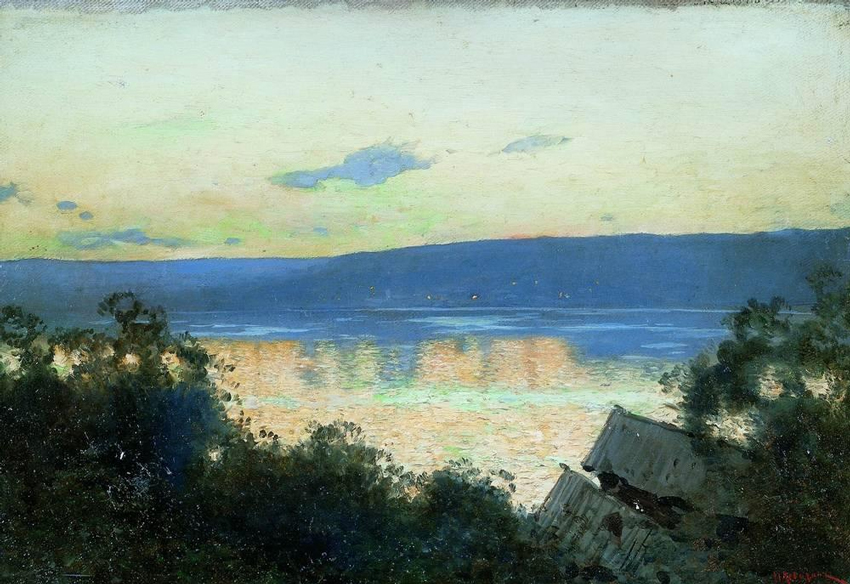
Most of us already knew something of the lives and works of Chekhov, Tolstoy and Tchaikovsky, if not so much about the sometimes stormy relationships between them, but the painter, Isaac Levitan, few of whose works are displayed in the West, was less known. The beauty of his landscapes was a revelation, at odds perhaps with our concept of the Russian countryside. But, intriguingly, for all his skill, Levitan was not at his best portraying figures, instead enlisting the help of Nikolai Chekhov, brother of the playwright, with whom Levitan was friends, although they fell out over Chekhov’s basing of a story (The Grasshopper) on Levitan’s affair with a married painter.
A fascinating day.

The History of the Tree in Art from Giotto to Klimt
our summer study day

Shobhna Browne writes:
As we admired the leafy terraces and the tree-lined fairways of Edgbaston Golf Club, we all wondered why we were traipsing indoors on such a perfect summers day. The answer came very quickly! There could hardly be a more erudite and passionate speaker on ‘The tree in art’ than Clare Ford-Wille, an art historian and lecturer associated with both the National Gallery and the V&A.
In Lecture One: From Dead Trees to Living Trees in Medieval and Renaissance Art, what might have been a barren topic actually blossomed under Clare’s delightful presentation. She enthused on the significance of trees in religious paintings and the moral values trees projected in secular artworks, reminding us how deeply trees have sustained human existence, both physically and symbolically.
In Giotto’s vivid fresco ‘Lamentation’, the tree plays a dual role. It serves as an important compositional marker balancing the painting, while also functioning as a metaphor of hope, where its bare branches mark grief and desolation and other branches show budding, in anticipation of the resurrection.

After our coffee break in Lecture Two: The Tree Triumphant in 16th and 17th Century Painting, Clare spoke about artists like Titian and Poussin, who helped define the classical landscape imagery that was so cherished by 17th-century patrons and later adored by British Grand Tourists. We saw majestic trees with their branches stretching skyward and roots grounded deep into the earth to providing a visual feast of harmony and stability.
In Titian’s ‘Bacchus and Ariadne’ (c. 1520–23, National Gallery), the once-vibrant colours of some of the trees had browned over time due to chemical changes, but still, the dynamic composition dazzled us.
Justus Utens’ ‘The Gardens of the Villa Castello’, Florence, (1599–1602), showed clipped box-hedging, creating a sense of order from chaos and possibly echoing the violent Protestant-Catholic divide that was shaping Europe at the time.

After lunch in Lecture Three: The Diversity of the Tree in 18th and 19th Century Art we moved into a more expressive era where trees were painted with a new freedom and individuality. Impressionists and Post-Impressionist such as Monet, Van Gogh and Cézanne, used the tree not just as subject, but as a medium for emotion and movement.
In Fragonard’s ‘The Souvenir’ (c.1776–8), a narrative painting, we see a tree featured in a romantic custom that dates back to antiquity; the carving of a lover’s name into a trunk, perhaps in a bid to make love permanent!
In Turner’s ‘Beech Tree at Norbury Park’, a delicate pencil and watercolour sketch explodes with emotional intensity, in true Turner style! And in Vincent van Gogh’s, ‘Old Olive Trees’, (1889), the vivid, swirling landscape of gnarled trunks and expressive colour, offers us a glimpse into the artist’s turbulent inner world.
In closing, there was lively banter during the Q&A session on Napoleon’s tree-lined avenues, and we learn from a member of the audience that they were planted to provide shade for troops and project a sense of imperial order. These trees still stand today as a legacy of military planning!
Finally, we all left enlightened and inspired, drawn back into the sunshine.

UNRAVELLING THE SILK ROAD
with Chris Aslan
‘Impressions of an Outstanding Study Day’ by Chrissie Twigg

He must have learnt some tricks from the literate and numerate Iranian born Sogdian traders who allegedly put honey on the lips of their babies to make them sweet talking and gum on their fingers so money would stick. Funny, generous and a born Silk Road salesman, many of us were clamouring to join one of his privately led small group tours by the end of the day.
Chris transported us along the vast network of ancient trade routes from China and the Far East to the Mediterranean learning about the economic exchanges of bamboo, ginger, rhubarb (!), cotton, herbal medicines, gold coins, perfume, olive oil, dates, nuts and many other goods.
We learnt about how tortuously difficult sericulture is – that is the production of silk and the rearing of silkworms who require vast quantities of fresh mulberry leaves and near silence so they can munch undisturbed. “Such divas!” as Chris exclaimed. No one was left in any doubt that producing and dying silk with onion skins or madder root or Afghan zok was an exhausting, labour intensive BIG palaver.
Cotton production was equally beset with problems not aided by British colonialism in India nor, later, competing cheaper American cotton. Ghandi ensured cotton’s historical importance by vowing never to wear any clothes he hadn’t spun himself. He wore khadi, a hand spun and woven natural fibre to signify the struggle for freedom of the Indian subcontinent. He encouraged everyone to learn to spin and weave and his Indian flag depicted a spinning wheel as a sign of enslavement but also independence.
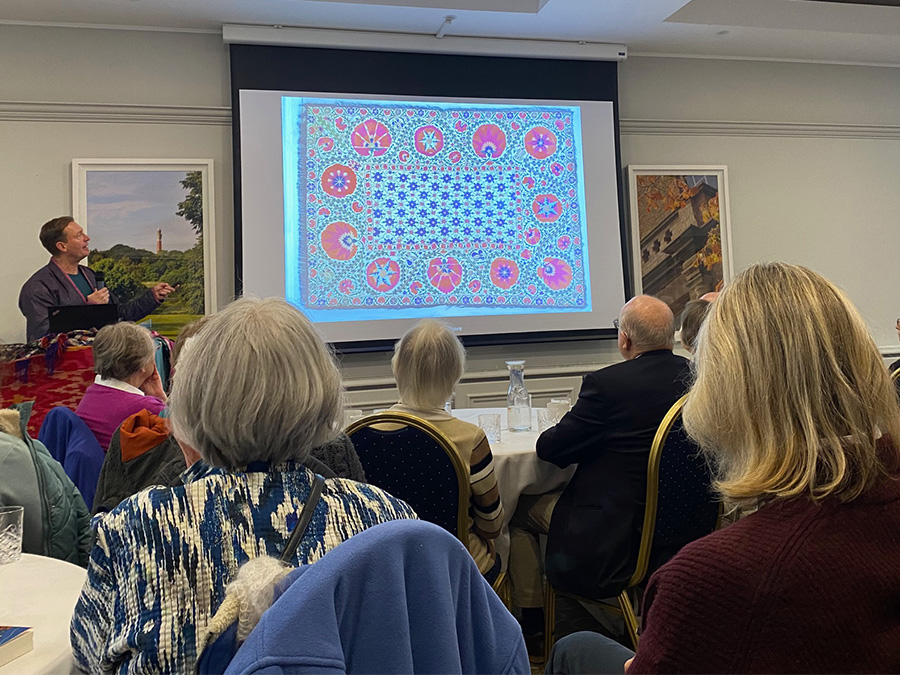
After three fascinating lectures we too were spinning with facts and rich imagery from Chris’ colourful slides and slipped off into the late afternoon dreaming of travels in foreign lands.

Please Note: The Arts Society Birmingham regrets that once a booking for a trip or visit has been confirmed by the organiser, refunds will only be given if a replacement is found. If no replacement is found, a part refund will be given for direct costs not incurred.
The Arts Society Birmingham cannot be held responsible for any personal accident, loss, damage or theft of Members’ personal property during lectures and visits/special interest days. Members are covered against proven liability of Third Parties.
Holland’s Golden Age Revealed
‘Impressions of the Day’ by The Chairman

This study day gave us a wonderful introduction to the Art of 17th Century Holland. Our lecturer was Jane E Choy-Thurlow, who in 2018 was made a Knight in the Order of Oranje Nassau for her knowledge and work in the field of the Arts.
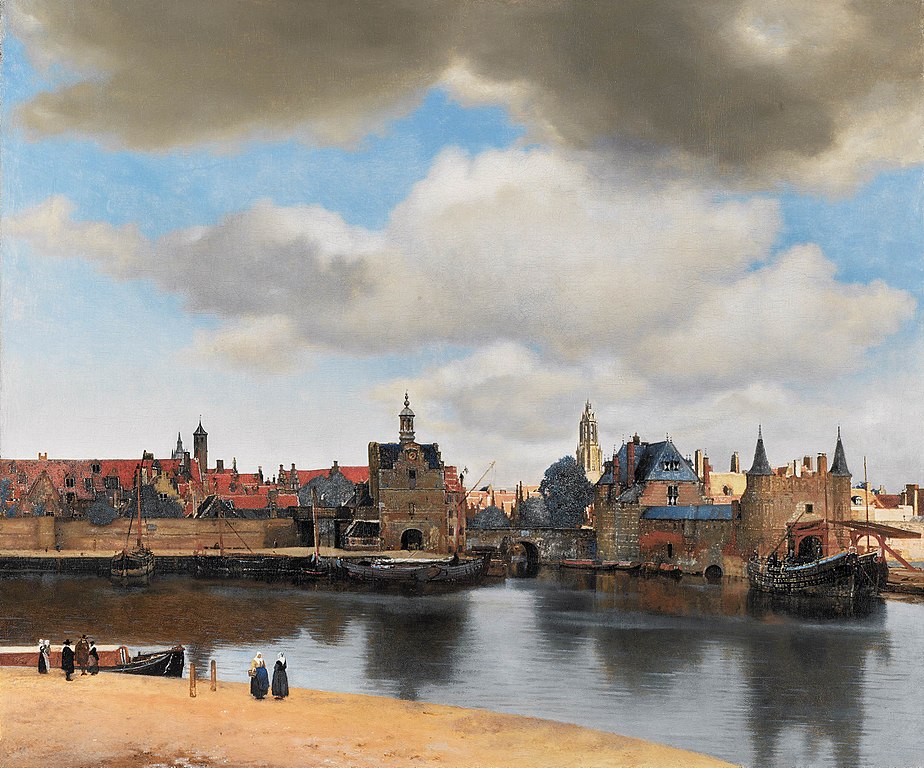
Our day was divided into three lectures. Firstly: ‘Intimacies and Intrigues’. This gave us the background of ‘history’ paintings and the development of portrait painting, with ideas, subject matter and techniques developing from the works of the Italian Renaissance. Our second lecture was entitled ‘Reality Show or Illusion? Genre Painting’, and our third ‘Mirrors of Reality – Landscape and Still Life Paintings’.
All three lectures were most lavishly illustrated, and we were able to study works in depth and detail. Close up views revealed brilliant techniques used to create the illusion of texture and three dimensions, and we learned how compositions were built up and perspective subtly used. Jane also showed us examples of how light was employed to focus and direct our attention.
We were treated to the work of many artists from the century, but three stand out in my mind from a brilliant day, and we studied several works by each. Firstly Rembrandt. We saw how he used light and a radically inventive style of composition. This was well illustrated in “The Night Watch”.
The second was Frans Hals and his most famous painting “The Laughing Cavalier” – though he is neither laughing nor a Cavalier! This painting can be considered an early and brilliant “swagger” portrait, and we were shown several more examples of the genre.
The third is Peter Bruegel the Elder. In his work we see landscapes and people set in them, with whole series of stories and sub- plots evolving. “Hunters in the Snow “and “The Peasant Wedding “are two great examples of his work that we looked at.
It is fair to say I have rarely had a day go by so quickly, so absorbing and fascinating were the lectures. Many thanks to Jane E Choy- Thurlow.

To find out about national special interest days, visit theartssociety.org – this will also give you a link to the various regions.