

visits
St Mary’s Convent – a Fascinating Visit to a Pugin Gem
Report by Susan Stockwell with photos by Ludmilla Poole

The facia of the Convent belies the extensive layout of the building housed within. The architect was Augustus Welby Northmore Pugin who designed the Houses of Parliament amongst other notable buildings. The interior is richly adorned with vibrant colours of gold, blue, red and green predominantly. The original altar was destroyed in a bombing raid in July 1942 as were the stained-glass windows but restored by the son of the Convent’s original benefactor John Hardman Senior who along with the Earl of Shrewsbury and Archbishop Wiseman approved and oversaw the building plans.
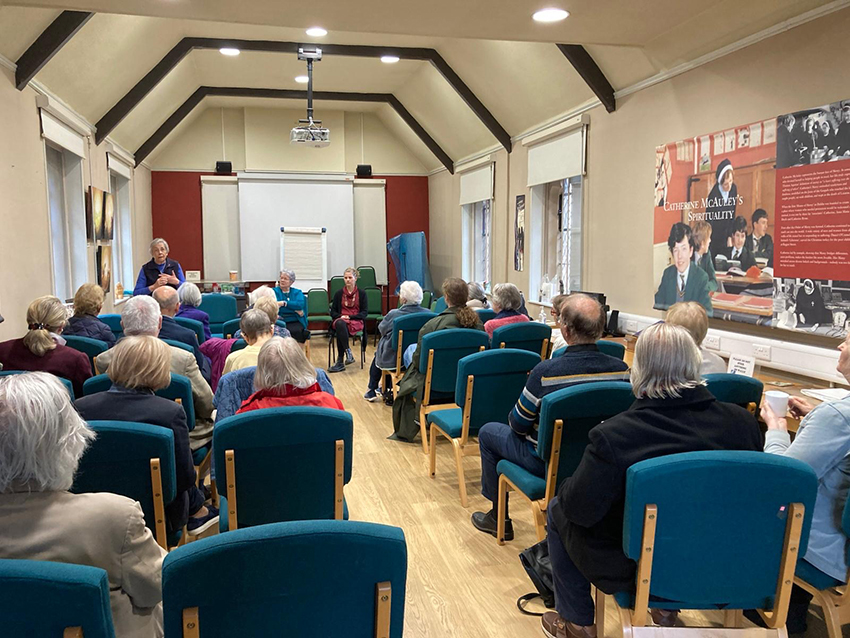
The Venerable Catherine McAuley was foremost in its founding in 1841, and it was once a thriving community of nuns whose mission it was to give the poor women of the Parish useful life skills to enable them to support themselves and similarly to educate the children. The founding order “The Sisters of Mercy” originated in Baggot Street Dublin where Archbishop Wiseman saw Catherine, a lay woman at the time who became a Sister and with three other women ensured the mission flourished spreading throughout England, Scotland and Wales. Then setting up Missions in Africa, Newfoundland, the Philippines, the US, Australia and New Zealand.
Religious vocations in the 1960s saw a decline in the younger generation changing to an older age profile. In the late 1990s when the Sisters were becoming elderly their purpose changed from its original, traditional mission to focus on Heritage, Outreach and Spiritual Retreats centred on Social Justice.
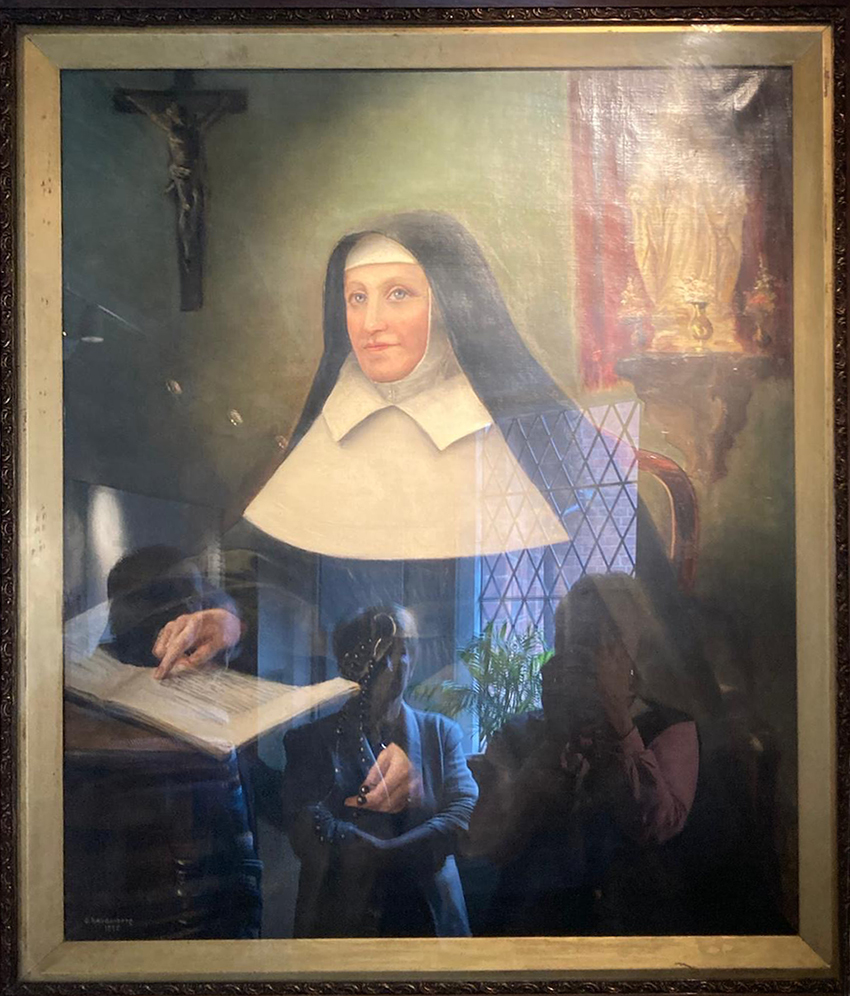
Before the 20th Century it was autonomous and open to visitors from other Convents. Indeed, John Henry Newman visited the Convent when he was made Cardinal. By coincidence, the day of our visit 9th October is the feast day of John Henry Newman.
In the 19th Century additional wings were added and the original spiral staircase taken out to install a lift. It is a Grade II star listed building. St Mary’s took an almost direct hit during bombing targeting the nearby munitions factory destroying St Mary-s Schools and damaging the Altar later ornately and strikingly reimagined.
The Sisters as nurses tended to soldiers in the First World War and Crimean where their work was commended by Florence Nightingale. A pictorial record can be seen on display in the Stepped Gallery. The evolving life of the Convent is commemorated in display cabinets throughout the building housing original artifacts, photographs, costumes and religious reliquaries marking the life of St Mary’s Convent and Heritage Centre.

It is still a thriving community but has only four resident Sisters with an Archivist and Administrator to assist in the day to day running of the Centre.
The visit culminated in a satisfying two course lunch cooked on the premises by the resident chef followed by tea or coffee before we departed feeling enriched by the experience and leisurely time spent in the company of our Sister guides.

Visit to Berkeley Castle &
Dr. Jenner’s House
‘Impressions of a Grand Day Out’ by Anthony Collins

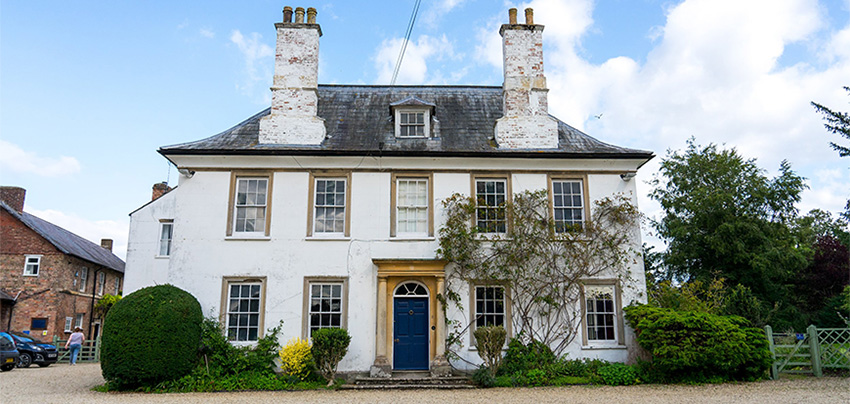
Thirty-six members and friends of the Art Society, led by Brenda, enjoyed a fascinating day which included visiting Berkeley Castle, seat of the Berkeley family for nearly nine centuries, the nearby home of Dr Edward Jenner, pioneer of smallpox vaccine, and the magnificent Berkeley church, with Jenner’s grave and the tomb of Lord Thomas Berkeley who fought for Edward III at Crecy.
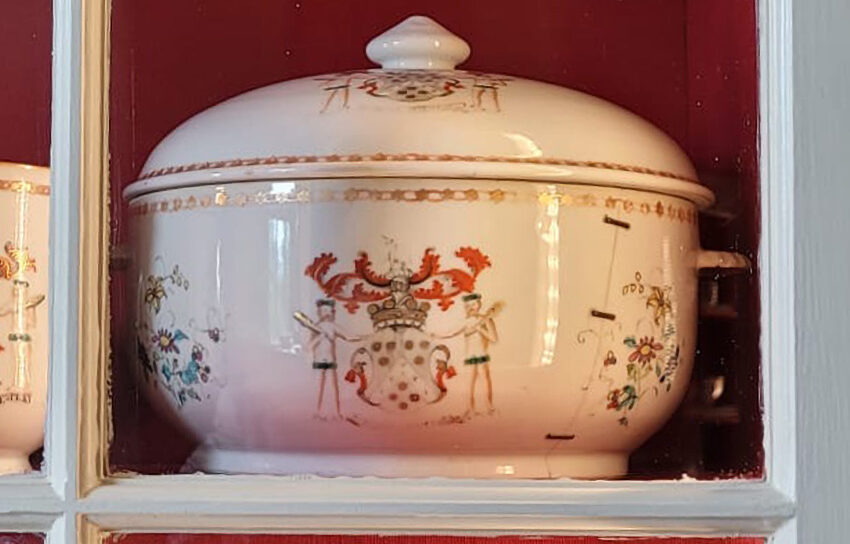
There was much to take in, top of the list being the probable site of the murder of Edward II. We were particularly blessed by having a wonderful guide in Eleanor Taylor who walked us through the many rooms of the castle, most recently made famous as the set of Wolf Hall. She enlivened our visit with stories of the Berkeleys who in the eighteenth century ordered their dinner service from China, only to find when it was delivered that instead of lions being shown as part of the coat of arms, they depicted what appeared to be two cave men supporting the family crest!
Currently undergoing restoration, Dr Jenner’s house was nevertheless most interesting, not only for its beautiful Georgian furniture but also for giving a better understanding of the discovery of the vaccine and its insight into Jenner’s other interests and exploits such as his air balloon flight as far as Birdlip on the A417.
Whether it was the terraced castle gardens with every rose determined to show its best, the fascinating history of the Berkeley family or seeing the home of Dr Jenner it was a day to remember.
With grateful thanks to Anthony and Fiona Collins, Rob Bromley and The Chairman for the photos of the day.

KIDDERMINSTER CARPET MUSEUM
The Chairman’s Impressions
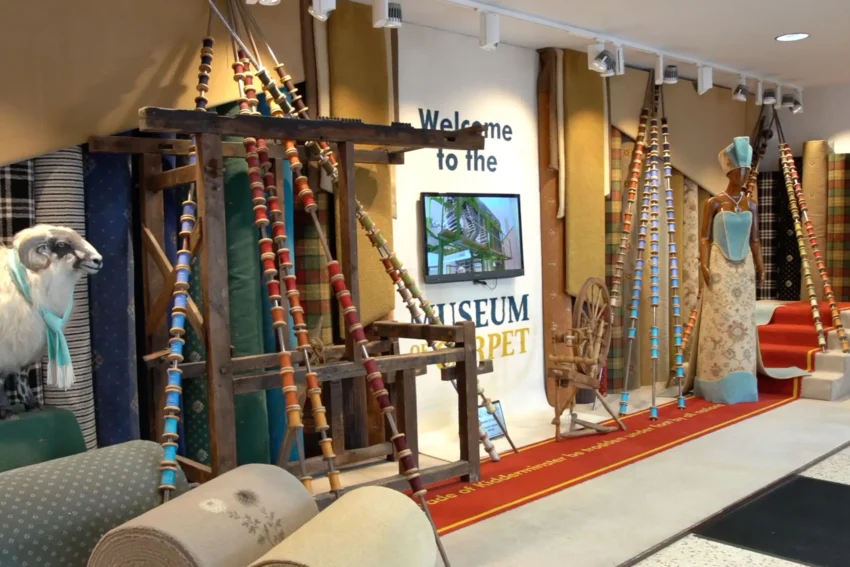
On first October an intrepid group of members overcame the floods and downpours to venture to Kidderminster. The Carpet Museum Trust was founded in 1981. It received £ 1.7 million from the Lottery Heritage Fund in 2008 and the Museum, housed in the former Stour Vale Mill, a fine grade 2 listed building, opened in 2012.
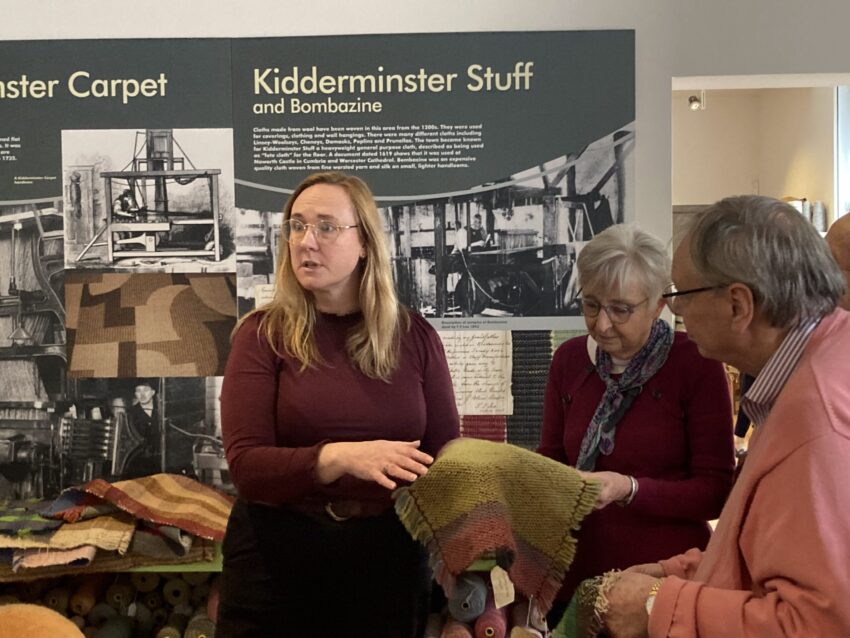
“Kidderminster Stuff”, a heavyweight general-purpose cloth with a variety of uses including floor covering, was the first important cloth to be woven in the town in the 17th century. Throughout the 18th century demand for carpets grew. Handwoven Kidderminster carpets were proudly on show at the 1851 Great Exhibition. Then came power looms, the town expanded, and the factories and looms got bigger. The 20th century saw the introduction of wall-to-wall carpeting creating an ever-increasing demand, and by the 1960s about 15,000 people worked in the industry.
However, it was not to last. A new type of “tufted”carpet from the U.S.A appeared, which was much cheaper to produce, and which led to the demise of the industry as a major employer. Today only one dedicated mill survives.
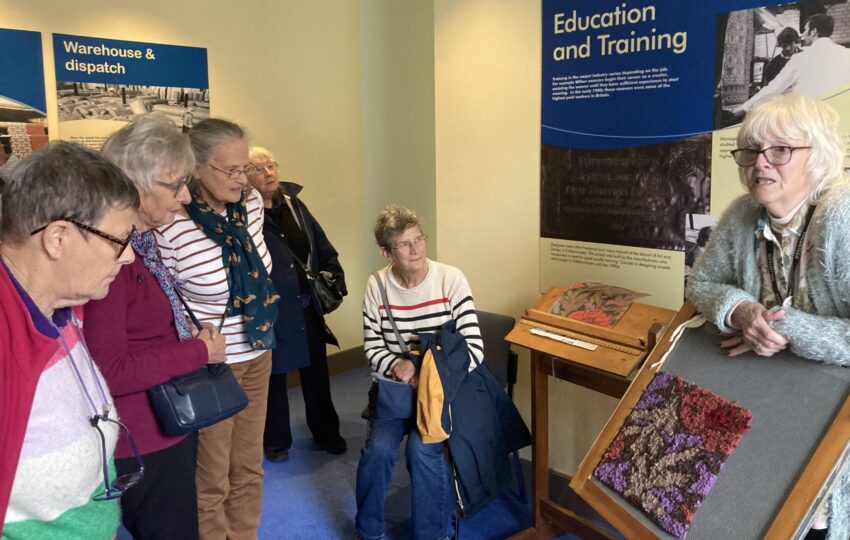
The Museum is a centre of heritage art and industry. After a welcome warm drink, we were given a most comprehensive tour of the exhibition galleries, beginning with a history of carpet design down the centuries. We were able to create designs ourselves – with some computer help! The second gallery was all about the evolution of carpet manufacturing – from “stuff” to Wilton and Axminster weaving.
We then learned about the families who worked in the industry down the generations. Brightly and colourfully illustrated, there are many informative wall displays, photographs and videos. We also handled a variety of artefacts, carpet samples, bobbins and shuttles. Finally, we watched volunteer staff spin wool and work hand looms and large power looms. These last were most impressive in size and extremely noisy, with the final machine creating both Wilton and Axminster rugs.
It all made for an absorbing and stimulating day out. And the sun came out on the drive home!

VISIT TO WOLLATON HALL – AN ENVIGORATING OUTING!
Wednesday 10th July 2024

The Chairman’s Impressions
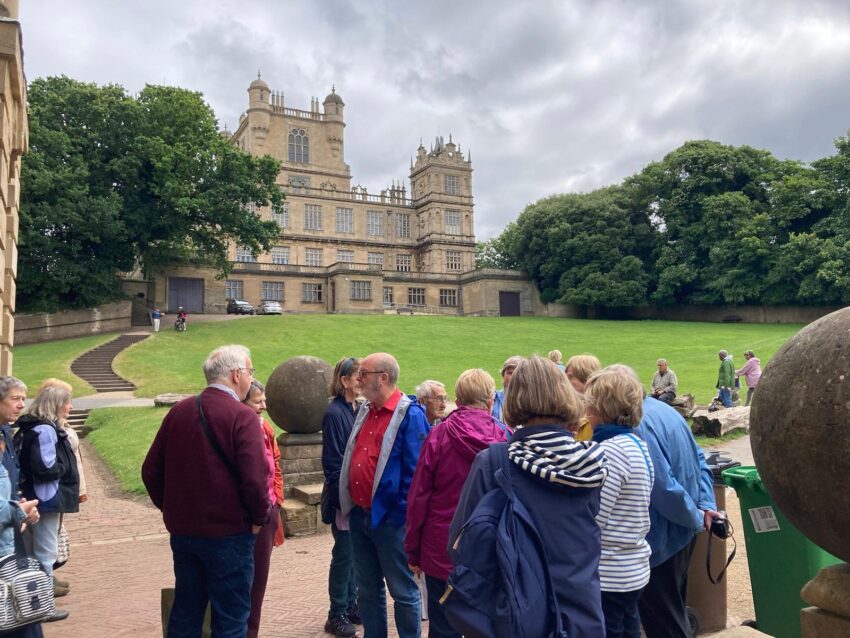
A group of Society members enjoyed a traditional coach outing to this fine Elizabethan building, which stands imposingly above the city of Nottingham. The Hall, built between 1580 and 1588 and designed by Robert Smythson who also designed Longleat and Hardwick Hall, is surrounded by five hundred acres of gardens and parkland which is home to herds of wild deer, both red and fallow.
We began our visit with coffee in a welcoming cafe situated in the stylish seventeenth century stable block. It was a steep climb to the front steps of the Hall, a taste of what was to come. A most comprehensive tour took us up many many steps, some steep and corkscrewing round to reach the Prospect room built on top of the Hall. This room commands an amazing view of the surrounding countryside over the treetops to the city and far hills. Yes, the climb was worth it! From the heights we then descended to the Tudor kitchen and cellars.
Nottingham City Council bought the estate in 1925. The Hall and grounds are well used for educational and recreational purposes by the city. Outdoor concerts and other events are regularly hosted and “Batman” was filmed here! The Hall also houses an extensive Natural History Museum including much about the art of taxidermy.
Many of us also enjoyed walks in the formal gardens and visited the Camellia House. This, an elegant Regency glasshouse built in 1823, is the oldest cast-iron-framed glasshouse in Europe and is said to be the inspiration for the Crystal Palace of 1851. Today it still houses some of the finest camellias in the country.
An interesting visit, at the end of which we certainly felt we had done our ‘steps for the day!
VISIT TO BLETCHLEY PARK
Monday 20th May 2024

‘Impressions’ by Joanna Good
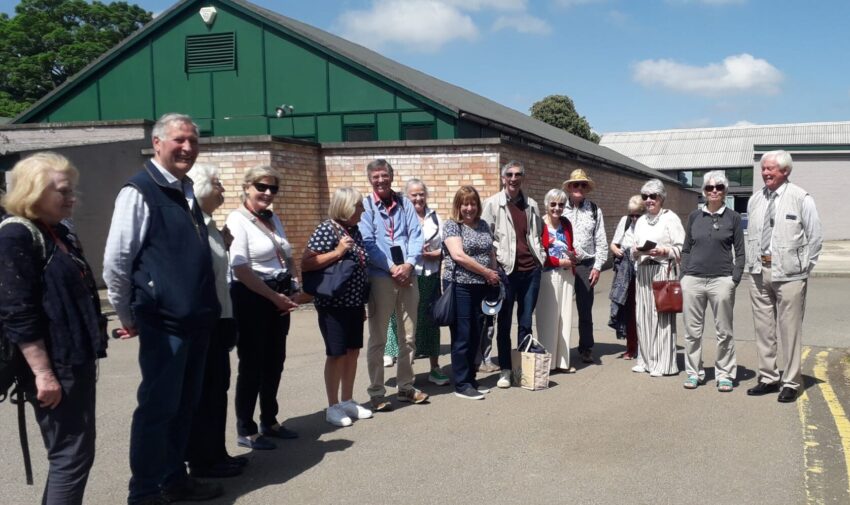
Although we left Birmingham late due to a coach driver calling in sick at the last minute, we arrived at Bletchley in plenty of time to explore most of the displays and exhibits before our guided tours. The original house, which is in remarkable condition with beautiful plaster ceilings and wood panelling was saved from demolition, along with some of the huts, in the 1980’s, by a chance comment about the importance of the site as the centre of code breaking in the war. It was extraordinary to discover that those working there, all of whom signed the Official Secrets Act, had said nothing, even to family and friends for about 35 years.
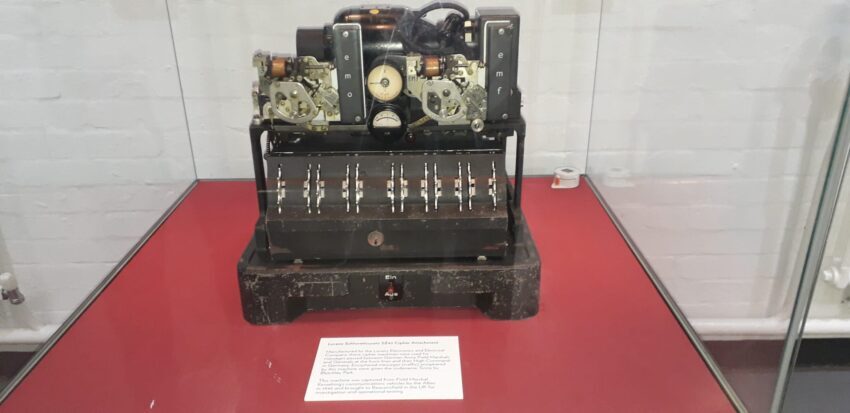
We were told about the processes of listening to and recording coded German Morse code messages, and the race to try and find ways to decode and understand what was being said. We learnt about brilliant young people working shifts, living in billets and travelling in in buses, boredom, monotony, tennis and amateur dramatics, and the constant striving to break a code which would change every 24 hours. Occasionally there were ‘eureka moments’. We heard about the Bombe machine which was developed to speed up the process of working out the settings of the German Enigma coding machine, and the Colossus, the first electronic computer, used to break the code of the more complicated German Lorenz machine.
I was so impressed by the single-mindedness of all those young people who worked to crack the codes which allowed Britain to listen in to the German communications and ultimately to shorten the Second World War. They said nothing, and it was only decades later that some of them received recognition for the work they did.
There were plenty of exhibits and descriptions of the technical processes at Bletchley, and some wonderful photographs taken during the War. Exploring the basic wooden huts and tiny offices brought the working conditions to life. The weather was perfect, and we had a wonderful trip!
Visit to Stourbridge Glass Museum & Red House Glass Cone
Tuesday 24th October 2023
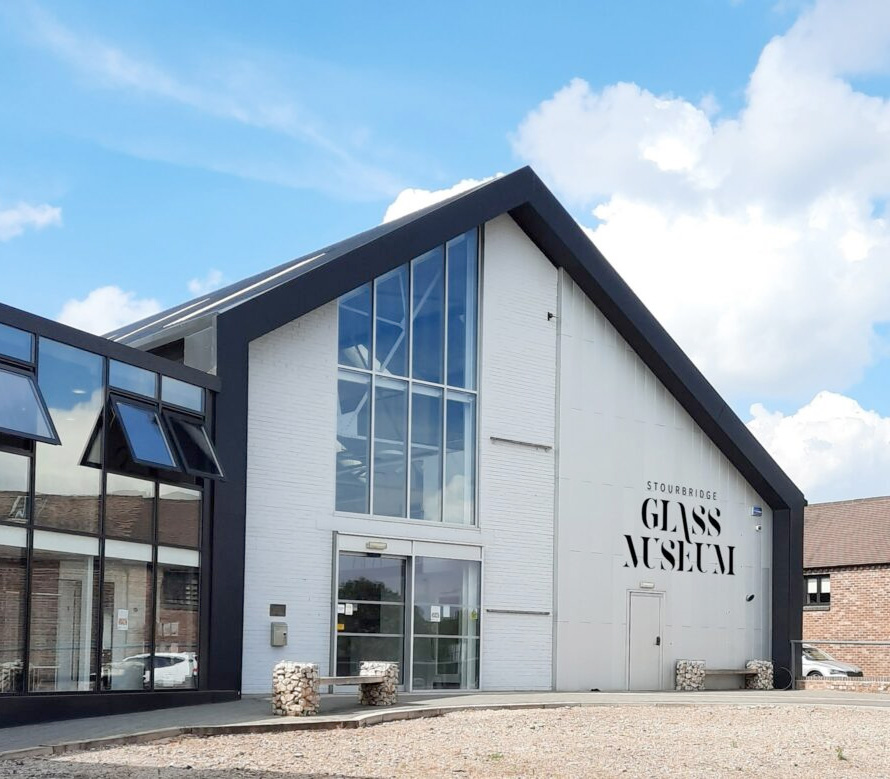
To read the Chairman’s impressions of a very successful visit click here to go to the NEWS page.
VISIT TO CAMBRIDGE
Tuesday 11th July 2023
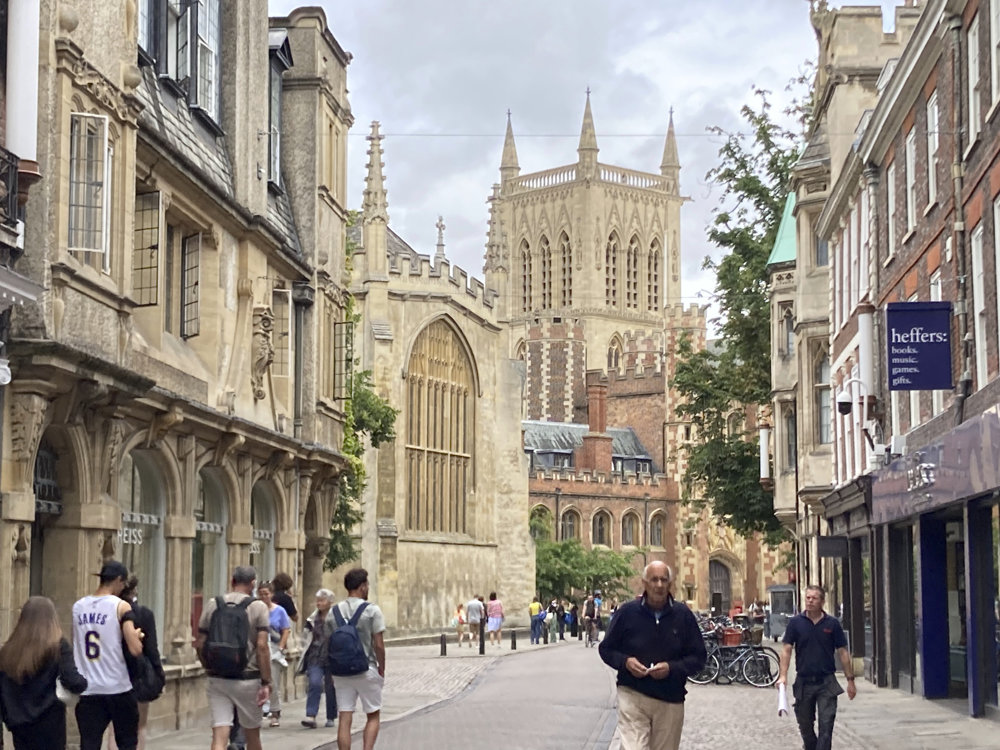
To read a member’s entertaining and illustrated account of this very successful ‘day out’ click here.
visit to TEMPLE NEWSAM
Wednesday 29th March 2023
A Members Impressions – Chrissie Twigg
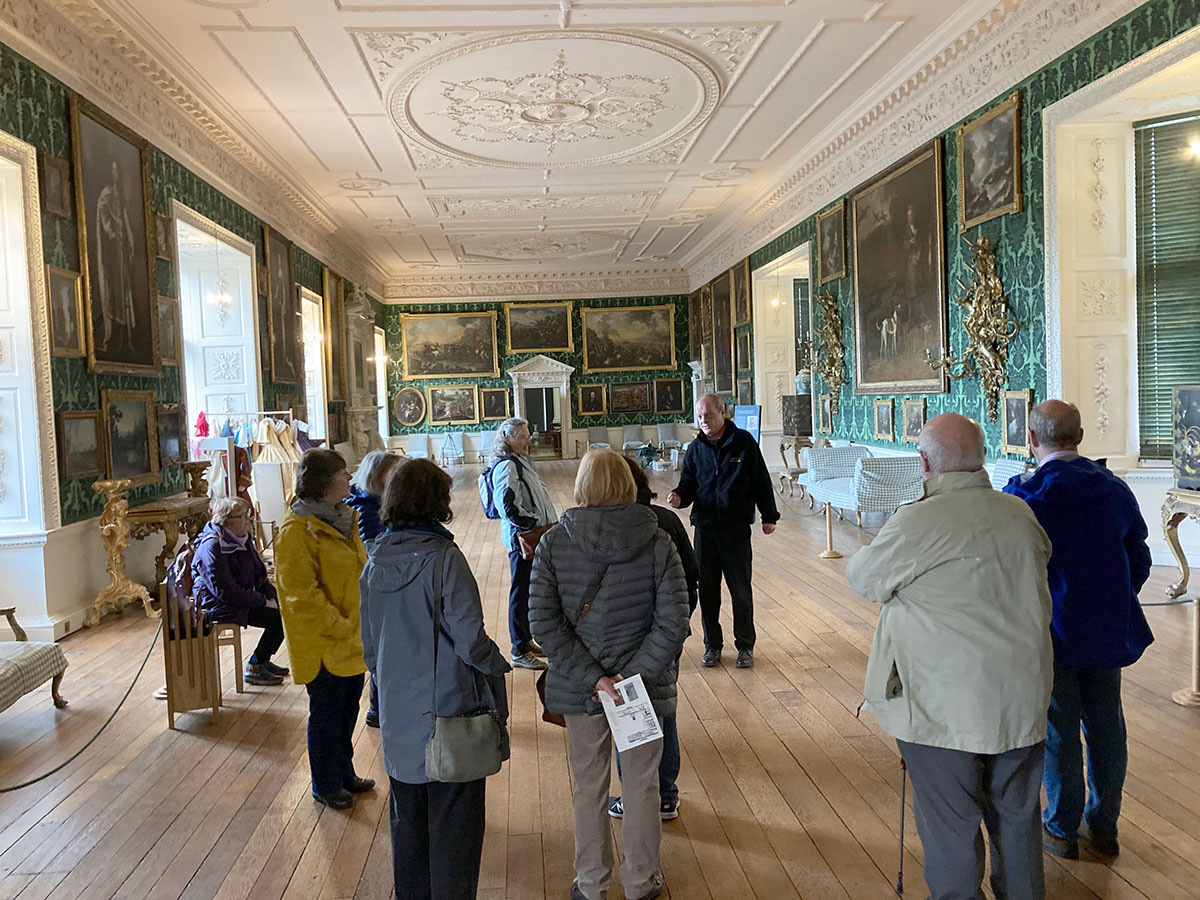
As I watched the snake of chattering primary school children in their high-viz jackets file through the entrance to Temple Newsam, my heart, uncharitably, sank but I need not have feared. Apart from our paths crossing in the Great Hall, the extensive network of rooms soon swallowed them up and we were left in peace with our hugely knowledgeable guide, Julie, to outline the illustrious history (see Wikipedia for full details of the fascinating backstory) of this Grade 1 listed building.
Mentioned in the Domesday Book, a manor house was built on the site in Tudor times. One infamous ancestor was Lord Darnley, briefly the second husband of Mary Queen of Scots, who was born here in 1546. Between 1660 and 1900 the Ingram family inherited the house with many improvements undertaken by the energetic Emily Meynell Ingram (1840-1904). Sadly, after 8 years of marriage her husband died in a hunting accident and she was widowed, childless, at 31. Like another contemporary, Alice de Rothschild (1847-1922) who inherited Waddesdon, Emily devoted the rest of her life to developing her extensive property portfolio. Here at Temple Newsam she set about returning parts of the house to Jacobean features so, for example, the library became a chapel, and she added a grand oak staircase to the Great Hall.

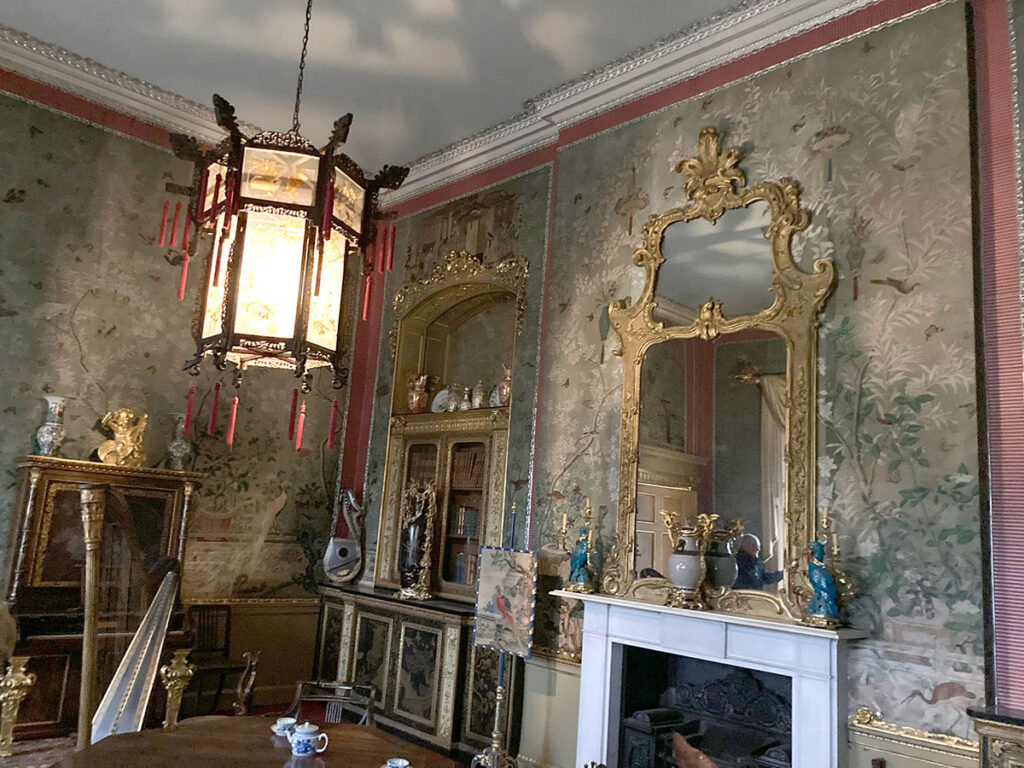
The house is stuffed with artefacts which is a credit to present custodians Leeds County Council as many items were sold off by Emily’s successor, her nephew, Edward Wood, 1st Earl of Halifax. Over the years, curators have tracked down and repurchased original items, bought or commissioned replicas. The most noteworthy originals in situ are several fine Chippendale pieces; (indeed the Chippendale Society uses Temple Newsam as its meeting place). If you like ceramics, and teapots in particular, there is a splendid collection or, if wallcoverings and tapestries are more to your taste, there are some wonderful wallpapers covered in exotic birds and flora.
After a long coach journey and a two-hour tour, it was a relief to head to the stables for lunch. Oh, for northern hospitality! We enjoyed an excellent and generous salad with attentive service. Free time after lunch inevitably meant spending money in the shop (grandparents beware – there is a good range of children’s books) as well as the usual gift fare. The beautiful grounds, landscaped by the ubiquitous Capability Brown, enabled a peaceful stroll under a grey but dry sky and gave a glimpse of how life must have been long ago. Only the faintest hum of traffic from the nearby M1 reminded one of the present. If you are passing this way, do stop by and visit this gem of the north.
All Visits and Special Interest Days are open to guests as well as Members, so please watch this space for more information.
Please Note: The Arts Society Birmingham regrets that once a booking for a trip or visit has been confirmed by the organiser, refunds will only be given if a replacement is found. If no replacement is found, a part refund will be given for direct costs not incurred.
The Arts Society Birmingham cannot be held responsible for any personal accident, loss, damage or theft of Members’ personal property during lectures and visits/special interest days. Members are covered against proven liability of Third Parties.
Photography
Members should be aware that photographs taken at The Arts Society Birmingham events, or on visits, will only be used for legitimate The Arts Society purposes.